
Set the matchup
The batter card supplies both offensive and defensive results. The pitcher card brings an ERA-based modifier and an out limit into the at-bat.
Legends of the Diamond · Dice Baseball
Historical player performance becomes a quick batter-versus-pitcher contest, using familiar baseball results and one shared Heritage dice engine.
Play the baseball demo
One plate appearance
The complete engine stays on the two player cards, so the game keeps moving without losing the statistical character of the season.
The batter card supplies both offensive and defensive results. The pitcher card brings an ERA-based modifier and an out limit into the at-bat.
Add the two result dice for a total from 2–12. A separate die tells you whether to read the ODD or EVEN side of the batter card.
Move the result by the pitcher modifier. The adjusted total always remains capped between 2 and 12.
Use the adjusted row and the ODD or EVEN side. The cell gives the play: K, GB, FB, OUT, BB, 1B, 2B, 3B, or HR.
Where is the defense?
Legends of the Diamond does not require separate fielder-rating cards. Every batter card contains offensive results and defensive outs. The pitcher changes which row is used, and the final cell decides who wins the matchup.
The pitcher records a strikeout.
A ground-ball out; follow the ground-ball rule for any runners.
A fly-ball out; follow the fly-ball rule for any runners.
The defense records a routine out.
One matchup, one result. Hits, walks, and home runs favour the batter. K, GB, FB, and OUT favour the pitcher and defense.
The card system
Batters carry the play results. Pitchers influence every matchup. Team cards keep the club information together.
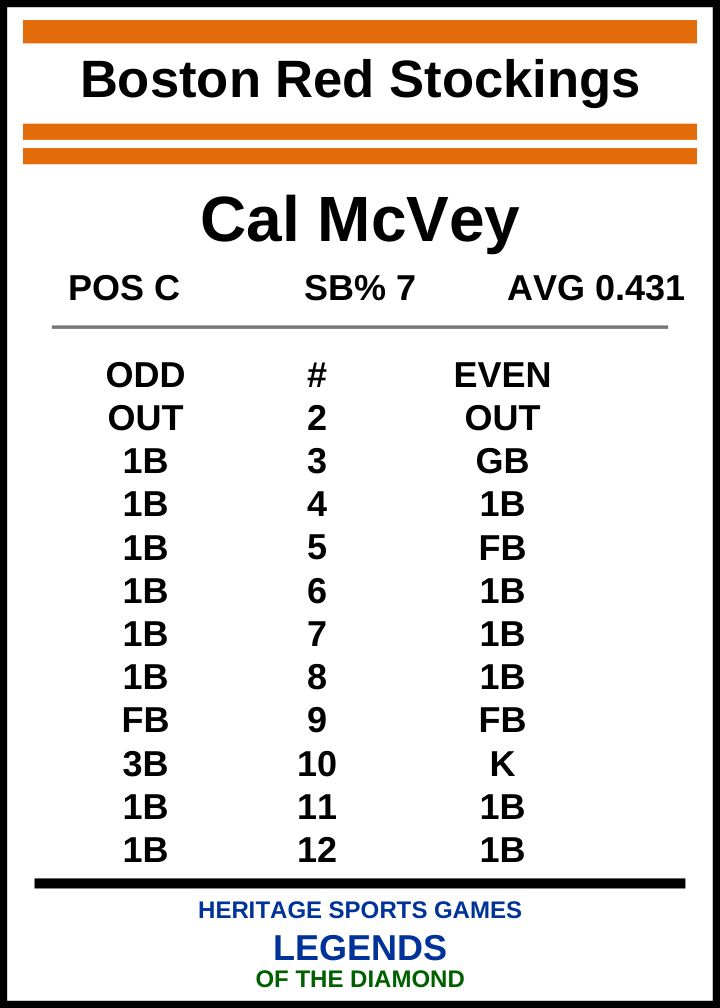
01 · Batter card
Each row contains two possible plays. Roll two dice for the 2–12 total, apply the pitcher modifier, then use the separate die to select ODD or EVEN.
C identifies Cal McVey as a catcher.
McVey’s SB rating is 7 on the 2–12 scale. Higher ratings improve the chance of a successful steal.
McVey’s 1871 batting average is .431.
Find the final total from 2–12 after applying the pitcher modifier.
The separate die selects the side, and that cell gives the play result.
Roll 8, apply Zettlein’s NEG-4, and move to row 4. If the separate die is EVEN, McVey’s result is 1B.
Apply the pitcher modifier to the batter roll. Final result remains capped from 2 through 12.
02 · Pitcher card
ERA determines the pitcher modifier. The card also shows role and out limit, with no unused ratings getting in the way.
03 · Team card
Team cards are for reference only. They list the manager, team batting average, team ERA, and home stadium, but they do not affect gameplay.
Current baseball test
Boston meets Chicago using the finished 1871 season cards. Both complete rosters are included, with pitchers batting, triples on the batter cards, and the existing pitcher modifiers and out limits.
11 players · 11 batter cards · 2 pitcher cards
11 players · 11 batter cards · 2 pitcher cards
Follow the playtest
Legends of the Diamond is not yet offered for sale. Questions and future season suggestions are welcome while testing continues.